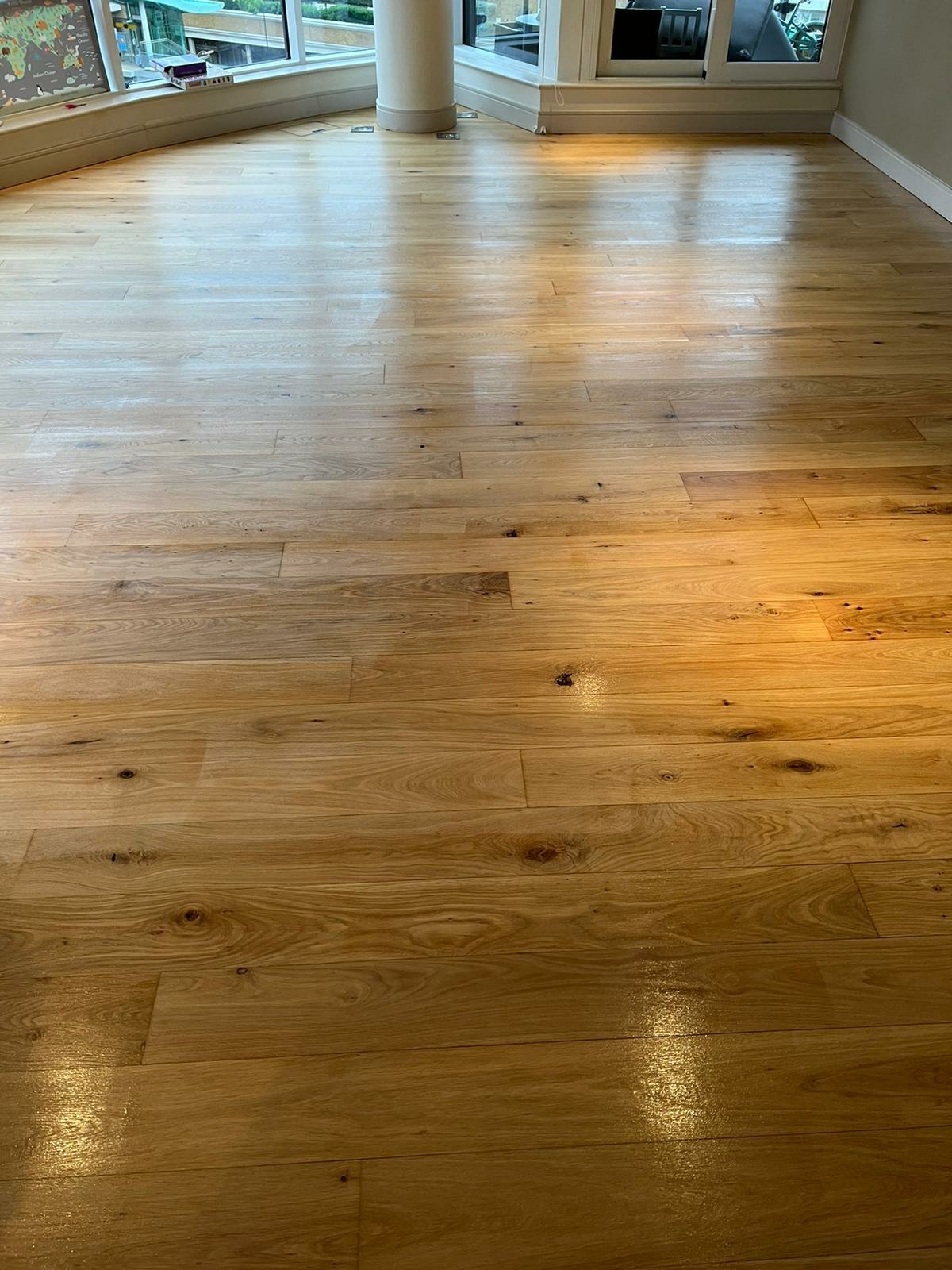
This Victorian terrace in Fulham required extensive engineered wood floor restoration after years of wear and surface damage. The property had experienced moisture issues and general deterioration across three rooms totalling 85 square metres. Our sanding service brought the engineered boards back to their original finish, revealing the grain detail that had been hidden beneath layers of dirt and old coating.
Work carried out
- Full surface sanding of engineered wood flooring
- Multi-grit progression sanding for even finish
- Dust containment and removal during works
- Surface inspection and minor repair work
- New protective finish application
- Final quality inspection and walk-through
About the project
The flooring in this Fulham property had seen twenty years of family life. The original finish had worn through in high traffic areas, particularly along the hallway and around doorways. The owners wanted to restore the boards rather than replace them, which meant working carefully to remove the old finish without damaging the engineered veneer. We started with a thorough site assessment, checking moisture levels and identifying any boards that needed repair before sanding commenced.
Our approach involved several stages of sanding with progressively finer grits, moving from 40 grit through to 120 grit paper. This process takes time but ensures an even surface free from scratches and inconsistencies. The main challenge was managing dust generation in a lived-in home. We installed temporary barriers between rooms, ran extraction equipment throughout the day, and used HEPA filtration to capture particles at source rather than letting them settle throughout the property. The whole job took five days, with the floor ready for light use within 24 hours of final coating application.
About our Fulham service
Fulham has a mix of property ages that require different approaches to flooring work. Victorian and Edwardian terraces dominate the area, many of which have original timber subfloors that can shift seasonally and require careful handling during sanding. These older properties often come with engineered boards installed during mid 20th century renovations, or with original solid wood that has been retrofitted with engineered layers over the decades. New build apartments and conversions in Fulham typically have engineered boards as standard, chosen for their stability in modern construction.
The soil composition and humidity levels in Fulham, being relatively close to the Thames, mean moisture management is always part of our consideration. We conduct moisture readings before and after work to ensure the floor is in the right condition for sanding. Most Fulham properties have relatively tight floor spaces compared to period country homes, which means we need to plan dust management carefully and work in a way that respects the daily life of families and businesses nearby. Our regular work in the area means we understand local building styles and can adapt our techniques accordingly.